
• Photos
    • InChrome
    • Crosslands
    • Monolithical
    • Anthropics
    • TeleKinetic
    • ConKinetic
  • Essays
    • Blog
    • Terratory
  • Info
    • About
    • Contact
Ryan Nemeth / Landscape Photographer
  • Photos
    • InChrome
    • Crosslands
    • Monolithical
    • Anthropics
    • TeleKinetic
    • ConKinetic
  • Essays
    • Blog
    • Terratory
  • Info
    • About
    • Contact

Turn on the Rain - Rainmaking!

Image by: Bart Van Damme - Hedwigepolder, Zeeland, Netherlands.

Image by: Bart Van Damme - Hedwigepolder, Zeeland, Netherlands.

Written by: Ryan Nemeth

This month, I turned on Public Broadcasting to catch the tail end of a radio report devoted to Charles Hatfield, otherwise known as the “Rainmaker”. I find it no coincidence that there is renewed public interest in water scarcity issues given the drought we face in the American Southwest. Thus, the idea of manufacturing rain seems like a very logical place for concerned citizens to pick up conversations around issues of water scarcity and production. Yes, you heard me right, there was and still is a profession devoted to making rain, queue the snake oil salesman!

To this day, a lot of people believe that Charles Hatfield was nothing more than a seedy profiteer. However, the case for the legitimacy of rainmaking was challenging in a very compelling way by Hatfield in a 1915 contract with the city of San Diego, CA.  By the end of 1915, San Diego was in its fifth year of drought and the city reservoirs of Morena and Otay were nearly empty. With water supplies threatened, the nervous City Councilmen gave verbal acceptance to Charles M. Hatfield’s offer. He boldly pledged to fill the reservoirs through his rainmaking services in exchange for $10,000 (Crawford, 2008).  

Ten days after Hatfield began operations near the Morena Reservoir, it started to rain. In fact, over the next two weeks, more than seventeen inches of rain fell in the mountains. The San Diego River rose and the Mission Valley flooded. In the flood, the Tijuana River carried away the farming settlement of Little Landers, which landed down river just north of the Mexican border. Roads and bridges disappeared and a second storm arrived on January 25th, bringing another foot of rain. As the reservoir crested, water topped the Sweetwater dam, which eventually gave way. All said and done, the ensuing damage and floods left 14 people dead and destroyed countless homes and farms throughout the valley (Crawford, 2008).

Oblivious to the scale of the havoc and with their mission complete at the Morena Reservoir, Charles and Paul Hatfield walked sixty miles back to San Diego and presented City Hall with their bill for $10,000. City Attorney Terence Cosgrove showed the brothers the door, explaining there was no written contract for their “rainmaking” and the deluge was “an act of God.” The brothers brooded for nearly a year and then filed suit on December 2, 1915. Cosgrove offered to settle with Hatfield, but only if he accepted responsibility for the $3,500,000 in damages caused by the flooding (Crawford, 2008). The “Rainmaker” declined on the deal, but to this day, his actions bring into question the validity of this mysterious practice.  Was rainmaking an actual legitimate profession and more importantly did it work?

In pondering these questions, I began to wonder how rainmaking even came about?  The history goes something like this; as far back as the first century A.D., Plutarch made the observation that rain follows battles, and nine centuries later, soldiers returning from the Civil War were still convinced this was true, having slogged through the mud of so many battlefields (Fountain, 2003). This idea explained, to the satisfaction of some, the storm that handicapped the Spanish Armada, as well as the torrential rains that followed the fireworks celebration for the opening of the Erie Canal (Ward, 1889).  History also reveals that there was widespread popular belief in a causal link between fire and rain. For example, there were many recorded accounts that the great Chicago fire caused a severe rainstorm (Owens, 2008). 

Notably, these theories were Americanized after the Civil War by a man named Edward Powers, who wrote War and The Weather, contending that most of the Civil War battles caused rain. Congress, pressed by influential Senators who owned Western land and hoped there might be something to these theories, spent over $20,000 testing the explosion or concussion theory. However, the concussion theory faded out after the trial testing in Texas failed miserably (Patterson, 1970).

Departing from the concussion theory, by the early 20th century, scientists and pseudoscientists were beginning to focus on what makes precipitation. The scientific research was instead centered on tiny particles called condensation nuclei around which rain droplets form. Vincent Schaefer, a General Electric researcher made the discovery that cooling a cloud would create ice crystals that could then act as condensation nuclei. It was from this discovery that modern cloud-seeding was born and legitimate projects to produce precipitation have since been based (Fountain, 2003).

Although many modern scientists will refute the efficacy of Hatfield’s rainmaking efforts, I happen to believe that Charles Hatfield’s and other notable rainmakers should receive recognition for their efforts.  If anything rainmakers helped carry the concept of rain production forward into something of commercial viability.  For me, this fact is both interesting and a little unsettling as I am not sure how I feel about the idea of manipulating the water cycle. What should be noted irrelevant of human attempts to make rain is that there is a huge distinction between changing the weather and controlling the weather. Sure modern cloud-seeding demonstrates that the capacity for rainmaking is real, but its effects still remain fleeting and not fully controllable.  Despite our best efforts, I believe that weather is a beast that shall never be tamed. Furthermore, I think that the Charles Hatfield story is a shining example of this lesson, be careful what you wish for!  

References:

  1. Crawford, R. (2008). 1916: The year a rainmaker says he ended city's drought. San Diego Union Tribune. San Diego: CA.
  2. Fountain, H. (2003). Ideas & Trends; The Science of Rain-Making Is Still Patchy. New York Times. Retrieved from: http://www.nytimes.com/2003/10/19/weekinreview/ideas-trends-the-science-of-rain-making-is-still-patchy.html
  3. Patterson, T. (1970). Hatfield the Rainmaker. The Journal of San Diego History. Vol. 16 (4). San Diego: CA. Retrieved from: https://www.sandiegohistory.org/journal/70winter/hatfield.htm.
  4. Macbride, M. (1911). With Napoleon at Waterloo and other Unpublished Documents of the Waterloo and Peninsular Campaigns. pp. 181-185. J.B. Lippincott Co. Philadelphia: PA.
  5. Owens, L.L. (2008). The great Chicago fire. ABDO Publishing Company. Adina: MN.
  6. Ward, R. (1889). Artificial rain, a review of the subject to the close of 1889. The American Meteorological Journal, Vol. 8. Ann Arbor: MI.  
Subscribe

Sign up with your email address to receive news and updates.

We respect your privacy.

Thank you!
Thursday 06.04.15
Posted by Ryan Nemeth
 

Is your Photo worth anything? - Economics of Digital Images.

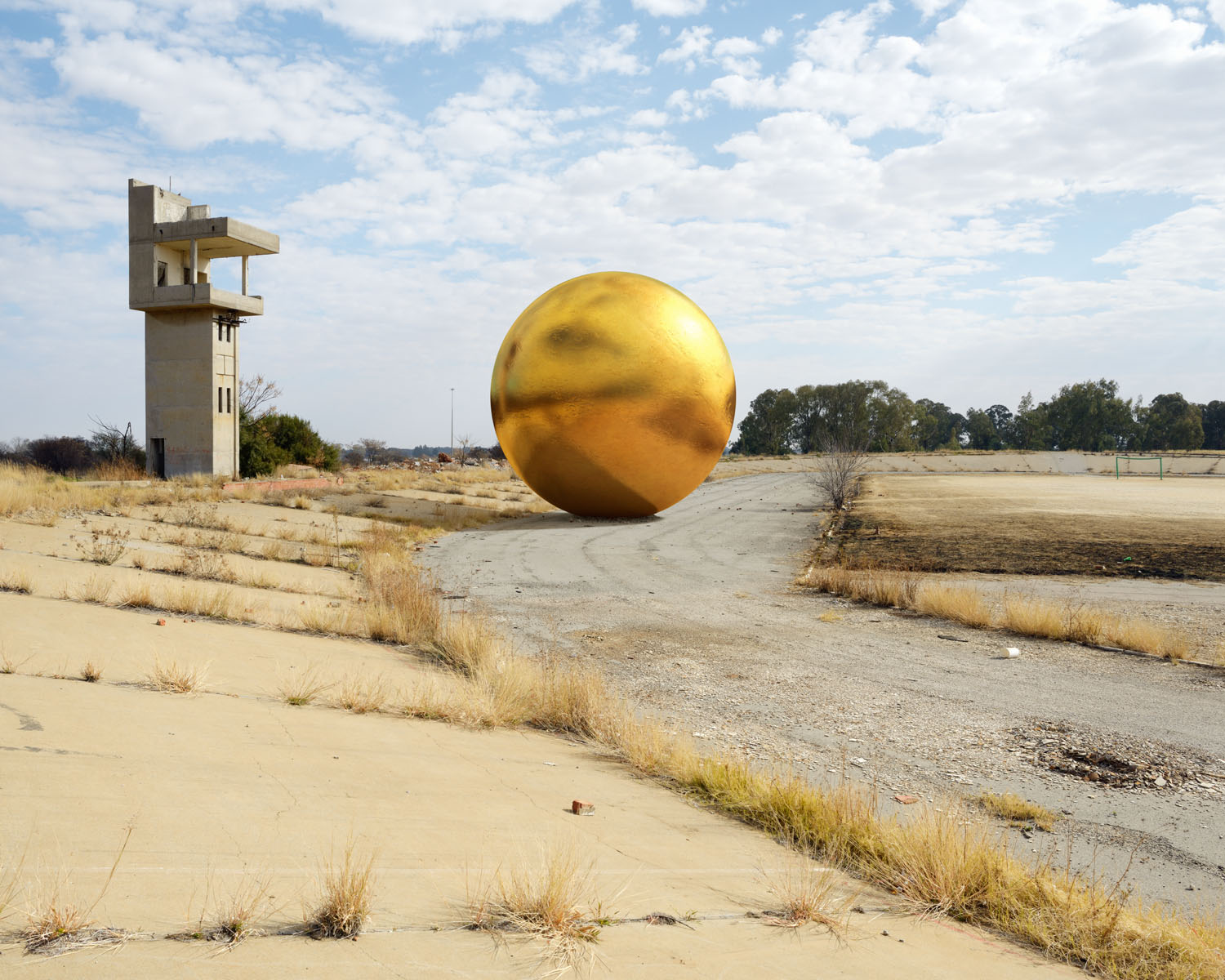
Image by: Dillon Marsh - Freestate Goldfield #5

Image by: Dillon Marsh - Freestate Goldfield #5

Written by: Ryan Nemeth

The economic laws of supply and demand are at play in the global art market economy as they influence the price of a piece of art or a photograph. Thus, an exploration of these economic principles must be explored in order to better understand the current state of our global photography market. To further the discussion, there are three key concepts that must be explored to provide a basic economic framework for an understanding of image pricing.  These concepts are the laws of supply and demand as well as the economic principle of price elasticity.

Original works of art, such as unique one of a kind paintings are obviously limited in supply. Inversely, photography by its very nature has historically been a medium that is based on print production and producing multiple works from a negative.  Inherently, this production capacity makes photography a medium that has traditionally been tied to the concept of a series of work, mainly due to the capacity for the production of multiples. Thus, because printed photographs are less scarce and there is the capacity to make an abundant supply, the price of a photo is usually much lower than that of a unique piece of art (ex. an original oil painting).

The law of demand states that if all other factors remain equal, the higher the price of a good, the less people will demand of that good. In other words, the higher the price, the lower the quantity demanded (see Graph 1 below). The amount of a good that buyers purchase at a higher price is less because as the price of a good goes up, so does the opportunity cost of buying that good. As a result, people will naturally avoid buying a product that will force them to forgo the consumption of something else they value more. In the graph below, lines D1, D2, and D3 represent different levels of consumer demand in the market. Line D2 represents lower demand whereas line D3 represents higher demand. Like the law of demand, the law of supply demonstrates the quantities that will be sold at a certain price. But unlike the law of demand, the supply relationship shows an upward slope (See Graph 1 below). This means that the higher the price, the higher the quantity supplied. Producers supply more at a higher price because selling a higher quantity at a higher price increases their revenue (Heakel, 2015). Lines S1, and S2 represent different levels of market supply. Thus an increase in suppy would be represented in an outward shift from line S2 to line S1 in the graph.

Graph 1:

(Sparknotes, 2015)

(Sparknotes, 2015)

It is common knowledge that the current photographic market is transitioning through changes that relate to the adoption and integration of disruptive technology as applied to the medium. Digital technology has been disruptive to photography because it has increased the production capacity of image making while cheapening the post-production and storage costs. Inherently production has therefore increased because the Internet has enhanced the capacity to share and store images in online environments. Thus, we can infer that the cost of making and sharing a photo has decreased to a price that is not much more than the cost of someone’s time. Because the cost of production is minimal, the supply of photographs has become seemingly limitless.  Applying the law of supply to this market change enables us to deduce that there is downward pressure on the aggregate price of photography in the market.  In the graph above, an increase in the supply of photographs moves the supply curve from S2 to S1, with a corresponding downward movement of price from P3 to P1 as quantity expands from Q2 to Q1.

As evidence in her 2013 report, Mary Meeker (2014) estimated over 500 million photos are being shared every day, she predicted this activity would increase by 2X by the end of 2013 compared to 2012. Today, the share volume is estimated at 1.8 billion images per day and is over three times compared to 2013 estimates. Moreover, the Meeker report pointed out that only 30 percent of overall mobile subscribers own a smartphone. This means there is a wide gap that could further expand the number of photos shared per day (Meeker, 2014).  This data points to the idea of sustained downward pressure on market pricing because of an increasing photo supply.  Many seasoned photographers complain about how tough the market is today, one considerable factor is the simple economics of the situation. Increased competition and the noted exponential increase in the supply of photography drives the price for photos and photographic services down as there is more competition in the market. The exponential sharing capacity of the Internet makes the photo market that much more difficult as it heightens downward price pressure.

Graph 2:

(Penn State University, 2015)

(Penn State University, 2015)

However, contrary to the implied downward supply side price pressure in the market are other economic and price indicators that suggest the economic concept of elasticity of demand is also at play. For example, recently there have been record-breaking prices at auction for fine art photographs by notable artists. This price and market behavior stands in direct contrast to the implied downward pressure created by an overall exponential increase in the supply of photographs. This market behavior is fully explained by the economic concept of elasticity of demand, see Graph 2 above. Price elasticity is a measure of the relationship between a change in the quantity demanded of a particular good and a change in its price. Price elasticity of demand explains price sensitivity in the market. If a small change in price is accompanied by a large change in quantity demanded, the product is said to be elastic or responsive to price changes. Inversely, if a product is inelastic, a large change in price is accompanied by a small amount of change in quantity demanded (Investopedia, 2015).

In the case of the current online photo market, it is assumed that a miniscule amount of the 1.8 billion shared images online actually has substantial, if any commercial value? Given this assumption, the bulk of photographs online exhibit an almost perfectly elastic demand curve. Thus, very small increases in price would affect the demand for these images greatly. For example, moving to an online model of paying for images would suggest a huge drop off in the market demand and consumption of online imagery.  Conversely, the photos sold recently at auction by famous and notable photographers have demonstrated an almost perfectly inelastic demand curve. Christopher Mahoney the head of Sotheby's photographs department commented in Coline Milliard’s (2014) article, he stated, “The market for classic photographs has never been stronger, with eight prices over $500,000, the 2014 auction demonstrated the enormous appetite among a broad base of collectors for top-tier photographs from the 19th and early-20th centuries."  This commentary suggests that near perfect inelastic market demand exists in some areas of the fine art photo market. Thus, consumers demand coveted photos at almost any price.  An economic explanation of the recent auction market suggests that a very limited supply of photos or even unique images coupled with intense demand creates this pricing escalation.

In conclusion, it could pay to actually limit the size of print editions and photographic works that are distributed in online environments. If an artist has enough demand for their work, this strategy might create a much more inelastic demand curve and higher prices for their photos and books. It is suggested that small runs of photos, books, and printed materials might actually hold their value better when distributed selectively through digital and online channels of distribution. It can also be inferred that satisfying market demand through increased production beyond demand may not be a wise strategy in terms of long-term photo valuation.

Seller Beware! 

References:

  1. Heakal, Reem. (2015). Economic basics: supply and demand. Investopedia.com Retrieved from:             http://www.investopedia.com/university/economics/economics3.asp.
  2. Investopedia.com (2015) Price elasticity of demand. Retrieved from: http://www.investopedia.com/terms/p/priceelasticity.asp.
  3. Meeker, M. (2014). Internet trends 2014, code conference. Kleiner, Perkins, Caufield, Byers. Retrieved from: http://www.kpcb.com/internet-trends.
  4. Milliard, C. (2014). Sotheby’s sets new world record for photography auction. Retrieved from: https://news.artnet.com/market/sothebys-sets-new-world-record-for-photography-auction-199945.
  5. Penn State University (2015). Elasticities and demand curve shapes. Retrieved from: https://www.e-education.psu.edu/drupal6/files/ebf200/images/0203b.jpg

Subscribe

Sign up with your email address to receive news and updates.

We respect your privacy.

Thank you!


Thursday 05.07.15
Posted by Ryan Nemeth
Comments: 1
 

American Southwest is Bone Dry

Image by: William LeGoullon - House for Sale

Image by: William LeGoullon - House for Sale

Written by: Ryan Nemeth

In a recent LA Times Op-Ed, NASA scientist, Jay Famiglietti estimated that California has only one year of water left in its reservoirs (Sneed, 2015). I have to admit that I was a little shocked when I learned just how dire the California drought has made the water situation in the Golden State. For me, the truth around water consumption is that humans are not good at rationing and protecting resources they cannot see. Water is an interesting renewable resource as we humans tend to believe that our access to H2O is limitless. Thus, we expect to turn on the spigot and see water. The problem being is that our consumption never really correlates with an ability to monitor and manage personal water reserves. Therefore, shared and invisible resources such as H2O makes the task and personal responsibility associated with resource management that much more complicated.  

The fact is that we are currently weathering a huge Western drought and the scope of the problem and conversation around water should not be limited to just California. With snow packs in the West at their lowest levels in 100 years, it makes the conversation about solutions to overcome water scarcity issues very real.  Beyond California, the Colorado River Basin is the main water supply and lifeline of the Southwest. A new study by NASA and University of California Irvine scientists, finds more than 75 percent of the water loss in the drought-stricken Colorado River Basin since late 2004 came from underground resources. The extent of groundwater loss may pose a greater threat to the water supply of the Western United States than previously thought (Rasmussen, 2014).

According to the U.S. Bureau of Reclamation, the federal water management agency, the basin has been suffering from prolonged, severe drought since 2000 and has experienced the driest 14-year period in the last hundred years. Monthly measurements in the change of water mass from December 2004 to November 2013 revealed the basin lost nearly 53 million acre feet (65 cubic kilometers) of freshwater. That's almost double the volume of the nation's largest reservoir, Nevada's Lake Mead (Rasmussen, 2014). This puts large metropolitan areas serviced by the Colorado river system like Los Angeles, Phoenix and Las Vegas at extreme risk for water related issues in the very near future.

Lake Mead’s elevation is currently just 1,087 feet above sea level and dropping steadily. Another 12 feet and the most severe drought-protection program the Southwest has ever seen will be triggered. If and when Lake Mead hits 1,075 feet, the government will declare a federal water shortage for the seven states that draw water from the Colorado River, forcing Nevada and the others to limit water use. Worse, a report by climate scientists and NASA predicts the Southwest will be in a decades-long drought by mid-century, the worst in 1,000 years. Despite the sobering predictions, former Las Vegas water czar Pat Mulroy is confident life will go on in the West (Phillips, 2014). I tend to agree with Mrs. Mulroy, but I also believe that life will have go on in a very different way, kiss your yards and golf courses goodbye!

We must be aware of the fact that Americans’ water footprint per person is larger than any other country in the world.  To identify solutions to the problem, it is imperative to understand how water is consumed here in the States. Given the fact that each of us on average consumes more than the rest of the globe, most people are not aware that the personal consumption of water only accounts for 10 percent of our total fresh water consumption in the U.S (IFAD, 2015).  This statistic is usually a shocking fact for most Americans.  Many Americans believe that water conservation efforts should be focused on reducing the personal consumption of water.  Thus, most of us would tend to think that 2-minute showers, low-flow toilets, efficient household appliances, and xeriscaping are the solutions to our H20 problems. These variables are definitely a part of the solution, but the statistics noted below show that the bigger problem lies in H2O consumption associated with our food and Agro-Industrial systems.  

Roughly seventy to eighty percent of fresh water is currently used for commercial and agricultural needs and another ten percent for industrial use.  Combined, the total commercial and industrial use of H20 accounts for roughly 90 percent of our total water consumption in the United States (IFAD, 2015).  Without a doubt the bulk of our fresh water is diverted to irrigation systems in order grow crops. Thus, conversations about where and how we grow our food seem to be the conversations that may have the most potential to shape our current water conservation efforts. What makes this conversation particularly difficult in the Golden State is the fact that California grows roughly 50% of our fruits, vegetables, and nuts in the United States.  Thus, California leads in water consumption for farming with 24.4 billion gallons consumed a day, one-fifth of all irrigation water in the U.S. (Fishman, 2015).  This number eludes to the problem that the Central Valley is an inhospitable environment for many of the water-intensive crops that are grown there. In fact, it is suggested that not much would grow in the Central Valley without irrigation systems. This really begs the question, should we be building large Agro-Industrial food complexes in areas of our country that require huge fresh water diversions? Both economics and national security interests would probably suggest that this is not the best idea in the world.

On a positive note, the United States uses less water as a nation than it did in 1980, when total use was 440 billion gallons a day.  In the last 30 years, the U.S. has more than doubled its GDP, and added 70 million new citizens while reducing total our water use. In economic terms, we use less water to produce an economy of $13 trillion than we did to produce an economy of $6 trillion, this is dramatic progress. Most of it comes in efficiency from power generation and farming. Farmers, overall, use 15% less water than they did in 1980, but produce 70% more food. That's a total increase in farm-water-productivity of almost 100% and this is huge (Fishman, 2015)! For me, the supply side solution to our problem lies in innovation and new technology that will increase water cycle efficiencies in agriculture and industry. Thus, I believe that we need to increase subsidies and economic incentives to encourage water and irrigation innovation. Doing so effectively would increase the supply of fresh water available for irrigation and commercial production.  Clearly there are expensive ways like desalinization to increase our water supply, but what I am suggesting is increased efficiency as part of the solution rather than to try and exclusively rely on methods for increasing our water supply. We must also confront the demand-side of this issue, thus, we must also find constructive ways to reduce our water footprint and to discourage waste and inefficient demand in the system. I believe that both supply-side and demand-side conservation will ultimately be a part of the solution to H20 scarcity, but we must begin to target intensive use areas like agriculture if we have any hopes of solving the larger problem. 

References:

  1. Alley, R. (2000). Ice-core evidence of abrupt climate changes. PNAS vol. 97 no. 4 pgs. 1331–1334, doi: 10.1073. Retrieved from: http://www.pnas.org/content/97/4/1331.full#ref-list-1.
  2. Fishman, C. (2015). The big thirst: the secret revolution in U.S. water use. Fastcompany.com. Retrieved from: http://www.fastcompany.com/1748537/big-thirst-secret-revolution-us-water-use.
  3. IFAD, No author. (2015). Water facts and figures. Retrieved from: http://www.ifad.org/english/water/key.htm.
  4. Phillips, A. (2015). Water experts discuss actions Southern Nevada has taken and what we should plan for. Lasvegassun.com. Retrieved from: http://lasvegassun.com/news/2015/mar/22/water-expert/.
  5. Rasmussen, C. (2014). Parched West is using up underground water.  NASA Jet Propulsion Laboratory, CIT. Retrieved from: http://www.jpl.nasa.gov/news/news.php?release=2014-242
  6. Sneed, A. (2015). California is about to run out of water, we have to act now. Wired.  Retrieved from: http://www.wired.com/2015/03/californias-run-water-act-now/.

Subscribe

Sign up with your email address to receive news and updates.

We respect your privacy.

Thank you!
Wednesday 03.25.15
Posted by Ryan Nemeth
 

Your HAPPINESS may depend on GreenSpace

Image by: Thomas Jackson - Cups #3

Image by: Thomas Jackson - Cups #3

Written by: Ryan Nemeth

Urbanization, defined as the increase in the number of cities and urban population, is not only a demographic movement but also includes, social, economic and psychological changes that constitute the demographic movement. It is a process that leads to the growth of cities due to industrialization and economic development.

In today’s increasingly global and interconnected world, over half of the world’s population (54 per cent) lives in urban areas although there is still substantial variability in the levels of urbanization across countries. The coming decades will bring further profound changes to the size and spatial distribution of the global population. The continuing urbanization and overall growth of the world’s population is projected to add 2.5 billion people to the urban population by 2050, with nearly 90 per cent of the increase concentrated in Asia and Africa. At the same time, the proportion of the world’s population living in urban areas is expected to increase, reaching 66 per cent by 2050.

The process of urbanization historically has been associated with other important economic and social transformations, which have brought greater geographic mobility, lower fertility, longer life expectancy and population ageing. Cities are important drivers of development and poverty reduction in both urban and rural areas, as they concentrate much of the national economic activity, government, commerce and transportation, and provide crucial links with rural areas, between cities, and across international borders.

Nevertheless, rapid and unplanned urban growth threatens sustainable development when the necessary infrastructure is not developed or when policies are not implemented to ensure that the benefits of city life are equitably shared. Today, despite the comparative advantage of cities, urban areas are more unequal than rural areas and hundreds of millions of the world’s urban poor live in sub-standard conditions. In some cities, unplanned or inadequately managed urban expansion leads to rapid sprawl, pollution, and environmental degradation, together with unsustainable production and consumption patterns. I would propose that the role of green space in cities is and will become extremely important for maintenance of urban ecology and sustainable development. Furthermore, including ample green space in densely populated areas will serve as a necessary connection to our natural world.  

Just as rats and other laboratory animals housed in unfit environments undergo systematic breakdowns in healthy, positive patterns of social functioning, so too do people. In greener settings such as rooms, buildings, neighborhoods, and larger areas with more vegetation, we find that people are more generous and more desirous of connections with others. In these settings we find stronger neighborhood social ties and greater sense of community, more mutual trust and willingness to help others; and we find evidence of healthier social functioning in neighborhood common space. There is more (positive) social interaction in those spaces and greater shared use of spaces by adults and children. In less green environments, we find higher rates of aggression, violence, violent crime, and property crime even after controlling for income and other differences. We also find more evidence of loneliness and more individuals reporting inadequate social support.

Access to nature, whether it is in the form of bona fide natural areas or in bits or views of nature, impacts psychological, as well as social functioning. Greater access to green views and green environments yields better cognitive functioning; more proactive, more self-discipline, and more impulse control; greater mental health overall; and greater resilience in response to stressful life events.  Less access to nature is linked to exacerbated attention deficit/hyperactivity disorder symptoms, more sadness and higher rates of clinical depression. People with less access to nature are more prone to stress and anxiety, as reflected not only individuals’ self-report but also measures of pulse rate, blood pressure, and stress-related patterns of nervous system and endocrine system anxiety, as well as physician-diagnosed anxiety disorders.

Rarely do the scientific findings on any question align so clearly. While for scientists the search for greater understanding of how and why and when contact with nature impacts health continues, for society as a whole the findings are clear. Parks and other green environments are an essential component of a healthy human habitat. While street trees, parks, and public green spaces are often regarded as mere amenities; ways to beautify our communities and make life a little more pleasant. The science tells us that they play a central role in human health and healthy human functioning. Much like eating greens provides essential nutrients, so does seeing and being around green. To promote a healthier, kinder, smarter, more effective, more resilient, and a more vital populace, communities should be designed to provide every individual with regular, diverse sources of “Vitamin G.” 

Ironically, just at the moment in our evolutionary history when we have turned decisively toward an urban existence with less and less contact with nature, scientists studying the impacts of the physical environment on people have discovered the importance of our connection to the natural world. In the last two decades, research on the impacts of green environments on human social, psychological, and physical health has burgeoned, and the evidence for the link between nature and human health has become so convincing that researchers have taken to using the phrase “Vitamin G” to capture nature’s role as a necessary ingredient in a healthy life (Maas, 2008). Much as nutrition scientists have discovered that fruits and vegetables play a crucial role in a healthy human diet, environmental scientists have discovered that trees, parks, and natural elements play an essential role in a healthy human habitat.

Conclusion: Protect, Interact, and Contribute to Greenspace our health and vitality depends on it!

References:

  1. Kuo, J. (2010). Parks and Other Green Environments: Essential Components of a Healthy Human Habitat. National Recreation and Parks Association.
  2. Maas, J. (2008). Vitimin G: Green environments-healthy environments. New England Journal of Medicine, 325(24):1740-2. Utrecht: Nivel.
  3. Srivastava, K. (2009). Industrial Psychiatry Journal. Jul-Dec; 18(2): 75–76. Retrieved from: http://www.ncbi.nlm.nih.gov/pmc/articles/PMC2996208/.
  4. United Nations, Department of Economic and Social Affairs, Population Division (2014). World Urbanization Prospects: The 2014 Revision, Highlights (ST/ESA/SER.A/352).

Subscribe

Sign up with your email address to receive Blog posts.

We respect your privacy.

Thank you!


Sunday 02.22.15
Posted by Ryan Nemeth
 

Reading Landscape through Photographs

Image by: Bryan Schutmaat

Image by: Bryan Schutmaat

Written by: Ryan Nemeth

As a landscape photographer, I have to admit that interpreting and reading the landscape can at times be very challenging. Not only is subjectivity involved in this process, but we are also challenged by the fact that landscape as an archive and readable medium can be tough to decode.   One of my aims as a photographer is to learn and to understand how we as humans utilize land as a resource and how we choose to live and shape our lives relative to land we live on. It is important that those that try and interpret and read landscape make themselves aware of some of the limitations and factors which may skew one’ s ability to assess and understand patterns and themes of landscape. Thus, there are common variables associated with landscapes that prevent us from seeing land and man associations, both in truth and objectivity. 

First of all, if we think of common landscapes as documents, it is obvious that they are documents written by many different authors. Rarely were all of those authors trying to “say” the same thing, and that is the reason why the “messages” we read from landscapes often seem contradictory. To say that human landscape is a complex document is a cosmic understatement. In any landscape, a variety of readings are not only possible, but also inevitable and even necessary. For those who are seeking final, unambiguous answers about the nature of the human condition, landscape is not the place to look.

Second, the creators of human landscapes do not all receive equal attention from those who try to read it. Some very important landscape makers have been perversely neglected in the traditional literature of landscape reading: women, gay people, poor people, and members of ethnic minorities, to mention but a few. Landscapes that are made by members of the Establishment, by contrast, receive inordinate attention: buildings designed by famous architects or the stately houses of wealthy people. Theoretically, at least, we ought to try to read all landscapes, no matter who was responsible for making them. It is especially important to try to do that when we are trying to gain insight into the lives of ordinary, unlettered people. If we truly believe that landscape is a lens that lets us look into the lives and societies of ordinary folk, scholars must necessarily pay special attention to the landscapes those ordinary people created. That does not always come easily. There are plenty of lordly plantation houses strewn across the South, but very few sharecroppers’ cabins survive. Thus, our view of landscape is skewed, partly because of what we choose to notice, partly because of what is actually there.

Third, to decipher meaning in ordinary landscapes is inherently more difficult than interpreting other kinds of historic documents. Written documents, for example, like diaries, essays, or newspaper stories, commonly are signed by their authors. They are meant to be read. If scholars are in doubt about what those written documents mean, they can ask the author to explain, or they can read what other commentators have written on the subject. But most ordinary human landscapes carry no signature and certainly cannot be attributed to any single person. Nobody can be tagged for the responsibility of making most commonplace landscapes, and there is seldom any identifiable person we can ask about what those landscapes mean.

Fourth, like all physical artifacts, landscape is a selectively incomplete document. Even in the United States, where human landscapes tend to be fairly new by global standards, the older parts have eroded over time, or are gone completely. Although New York City was founded in the early seventeenth century, there are virtually no structures in contemporary New York that predate 1800. Only the street patterns persist, and even some of those have been altered. That is why landscape is sometimes likened to a palimpsest: it is a document, to be sure, but a document that has been partly erased, smudged, and then written over, seemingly by people with illegible handwriting.

The final caveat is basically epistemological, and it relates not to the landscape as object, but to the eyes and minds of those who set out to read it. Because each of us sees a landscape with different eyes, the same landscape can be seen and interpreted in different ways. Some of these interpretations contradict one another, but that should neither surprise us nor disappoint us. When people set about to interpret the world, contradictions are inevitable. Recently we have heard strident claims that there are “right” ways and “wrong” ways to look at landscape. To take but one example, some “new cultural geographers” have contended that there is a “postmodern” way of interpreting landscape that is inherently superior to old-fashioned ways of looking, which are dismissed as “positivistic” or simply “traditional.”

The land remains as a physical, psychological, cultural, biological, scientific, and geological frontier, which begs for our attention.  As much as we think we know we about landscape we still have no clue about many complex man and land based interactions. The truth is that contemporary lifestyles are placing tremendous demands and pressures on traditional views of land as a resource.  The constraints and progressions of modern life and technology are pushing us to adapt and to learn to utilize and interact with land in different ways. I think that it is important to acknowledge that landscape is most definitely an active and participatory concept that is constantly being reshaped and challenged by human innovation and ideas. Therefore, landscapes are literally and figuratively being constantly deconstructed and reconstructed. Part of the beauty of trying to define and understand landscape is that you cannot fully grasp or hold this concept as it is dynamic and changing. Thus, landscape and its meaning is out there to be wrestled with and I believe that meaning is often inferred and best understood through a holistic approach to discovery that is multi-disciplined.  One of the disciplines that provides value and helps to shed light on landscape is the vocation of photography. 

Photographs are means for exploring landscape; they are powerful documents as they provide us with concrete evidence of what was. In many cases, landscapes have changed so much and at such a voracious pace that photos, drawings, and other written documents are all that we have as evidence of prior landscapes. The beauty of the digital revolution and the relevant explosion in digital imaging and photography is that we are capturing and documenting space and places like never before.  My assessment is that we are in some ways absolving many of the concerns laid out in prior sections of this article. For example, photos and related imaging technology are giving us much more data and information about our environment. Thus, we are able to discover and understand and frame biological and geological changes relative to human behavior in ways that were not possible without the advent of technology. It should be understood that the photograph is a powerful tool in the discovery and understanding of landscape.  As a medium for landscape discovery, photographs provide humans with another powerful tool that allows us to learn and adapt to our environment. It is interesting to think about how the photograph itself will help to shape our modern landscape or is already doing so?  Social media sites like Pintrest are allowing us to share functional and efficient design through photos. I can’t help but assume that this type of photo media is impacting and shaping our landscape in tremendous ways.

References:

  1. Wilson, C., Groth, & Paul, E. (2003). Everyday America : Cultural Landscape Studies after J. B. Jackson. Berkeley, CA, USA: University of California Press. ProQuest ebrary. Web. 21 January 2015.

Subscribe

Sign up with your email address to receive news and updates.

We respect your privacy.

Thank you!


Wednesday 01.21.15
Posted by Ryan Nemeth
Comments: 4
 
Newer / Older