• Photos
    • InChrome
    • Crosslands
    • Monolithical
    • Anthropics
    • TeleKinetic
    • ConKinetic
  • Essays
    • Blog
    • Terratory
  • Info
    • About
    • Contact
Ryan Nemeth / Landscape Photographer
  • Photos
    • InChrome
    • Crosslands
    • Monolithical
    • Anthropics
    • TeleKinetic
    • ConKinetic
  • Essays
    • Blog
    • Terratory
  • Info
    • About
    • Contact

BORDERS: Invisible Lines

State_border_1.jpg
State_border_7.jpg
State_border_13.jpg
State_border_11.jpg
State_border_3.jpg
State_border_12.jpg
State_border_10.jpg
State_border_5.jpg
State_border_1.jpg State_border_7.jpg State_border_13.jpg State_border_11.jpg State_border_3.jpg State_border_12.jpg State_border_10.jpg State_border_5.jpg

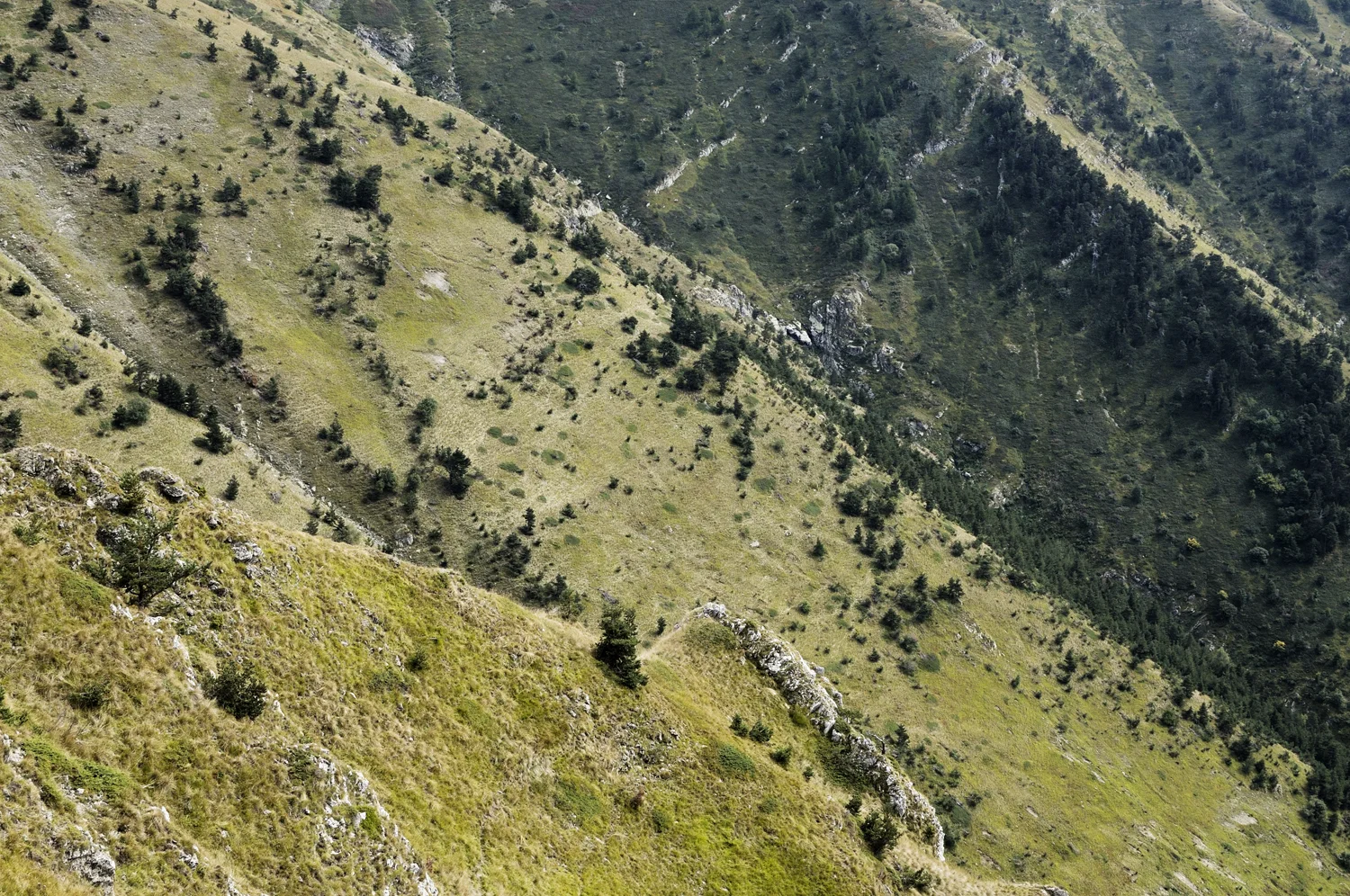
Images by: Luca Prestia - From the Series Confine de Stato


Written By: Ryan Nemeth

As nomadic people settled between the Tigris and Euphrates rivers in ancient Mesopotamia a new political format emerged, the territorial state. The newly formed territories were marked by power that extended outward from the city and into the surrounding countryside.  Enabled by common linguistics and a shared identity, this new social and economic structure helped create more efficient resource allocation for citizens living within the newly defined territorial boundaries.  History reveals that humans have always demarcated their territorial claims with lines, boundaries, or other conceptual separations as a means for creating identity, ownership, and order within geographic spatial confines.  Thus, borders are the product of the human act of demarcation and are defined as real or artificial lines that separate geographic boundaries.  Notably, borders have also played a pivotal role in defining territorial sovereignty by helping to establish and maintain the needed political, cultural, legal, and resource barriers that define countries, states, provinces, counties, cities, and towns.  In fact, the 1648 treaty of Westphalia established the ‘territorial state’ as the basis for the modern and internationally accepted Nation State system. Yet, the efficacy of this system remains challenged as globalization and the changing nature of world politics continues to reshape our concept of international borders.

The creation of internationally accepted borders has long been a viable way to control the flow of goods and resources to and from countries. Borders exist for several reasons such as the protection of the lives and properties of citizens, safeguarding national resources, maintaining law and order, providing structure for a system of national governance, and as a mechanism for international relations. All of the aforementioned being protectionist in nature. Though borders are built for these multipurpose objectives, their basic function is to limit the nation within itself. Thus, utilizing borders to gate access and to promote policies of economic nationalism worked reasonably well through the industrial age. This was especially true of economies that were restricted to predictable international exchanges of tangible products and goods across international lines. However, the rise of the service economy, the Internet, and many other post-industrial variables have severely challenged the functional concepts of the Westphalian border. 

Many economists, geographers, and sociologists assert that we increasingly live in a “borderless” world and the rise of globalism speaks directly to this assertion.  Globalism is defined as the increased interconnectedness and interdependence of peoples and countries and is largely predicated on two interrelated concepts.  First, the opening of borders to increase the flows of goods, services, capital, people and ideas across international borders.  Second, changes in institutional and political regimes at the international and national levels that facilitate or promote such flows.  Both of these concepts largely function via the economic principle of comparative advantage. Thus, open and free borders stimulate economic activity for all parties involved in the transference of products, people, and knowledge when trade is based on comparative advantage. By engaging in globalization, we increase the interaction and integration among the people, companies, and governments of different nations. In doing so, the flow of goods and resources is no longer restricted to defined geographies or traditional borders as defined by demarcated boundaries.  

The truth is that the cross border flows of capital, goods, and people are becoming increasingly complex in our modern world. Any proper assessment of this activity should therefore account for a complex and fluctuating mix of interlinked political, economic, cultural, geographic, ecological and psychological forces. Yet, one simple truth remains, the rise of the service economy, its relevant intangible deliverables and the growth of post-industrial infrastructure are yielding unparalleled global interconnectivity.  This new infrastructure capacity coupled with motivations of global trade and interaction have defined new geographic power structures that are no longer bound by Westphalian lines on a map. The truth is that there is a sea of dynamic and evolving phantom like borders that exist in our globalized world. Could it be that the rise of global interconnectivity and interdependence leads to global geography that is very different from the one we know today? 

Luca Prestia’s body of work, Confine de Stato, provides an intimate look at a traditional Westphalian border between Northern Italy and France.  In 1947, after months of intense negotiations, the border between the Italian and the French territories was redrawn along this line in the Col de Tende region.  In doing so, the Italian highlands were established by an imaginary boundary that is now marked by solitary milestones in the Col de Tende pass.  The Col de Tende pass holds lots of history as the Phoenecians, Greeks, and Roman also once laid claim to the high elevation pass. Yet, Empire borders and territorial claims have come and gone. I would suggest that we increasingly find ourselves in a world that is defined by invisible borders and dynamic geographic boundaries.  Thus, it is interesting to consider what this obscure geographic line high in the Alps truly represents in a 21st century world?

You can find more of Luca Prestia’s work here: http://cargocollective.com/lucaprestia

References:

  1. http://education.nationalgeographic.com/encyclopedia/border/
  2. http://www.vocabulary.com/dictionary/demarcation
  3. http://www.wwnorton.com/college/history/worlds-together-worlds-apart3/ch/03/summary.aspx
  4. http://www.krepublishers.com/02-Journals/JSS/JSS-24-0-000-10-Web/JSS-24-3-000-10-Abst-PDF/JSS-24-3-177-10-1012-Okhonmina-S/JSS-24-3-177-10-1012-Okhonmina-S-Tt.pdf
  5. http://www.uzh.ch/wsf/WSFocus_Newman.pdf
  6. http://www.who.int/trade/glossary/story043/en/
  7. http://www.globalization101.org/what-is-globalization/
  8. Perkmann, M., & Sum, N. L. (Eds.). (2002). Globalization, regionalization, and cross-border regions. Basingstoke/New York: Palgrave Macmillan. Retrieved from:   http://www.academia.edu/7489092/Irrelevant_Borders_Perspectives_of_Globalization 
  9. Alkalpler, E. (2008). The New World Order: Social and Economic Globalization versus Protection. Retrieved from: http://papers.ssrn.com/sol3/papers.cfm?abstract_id=1609567
Subscribe

Sign up with your email address to receive news and updates.

We respect your privacy.

Thank you!
Saturday 02.06.16
Posted by Ryan Nemeth
 

URBAN DILEMMAS: What stays and what goes?

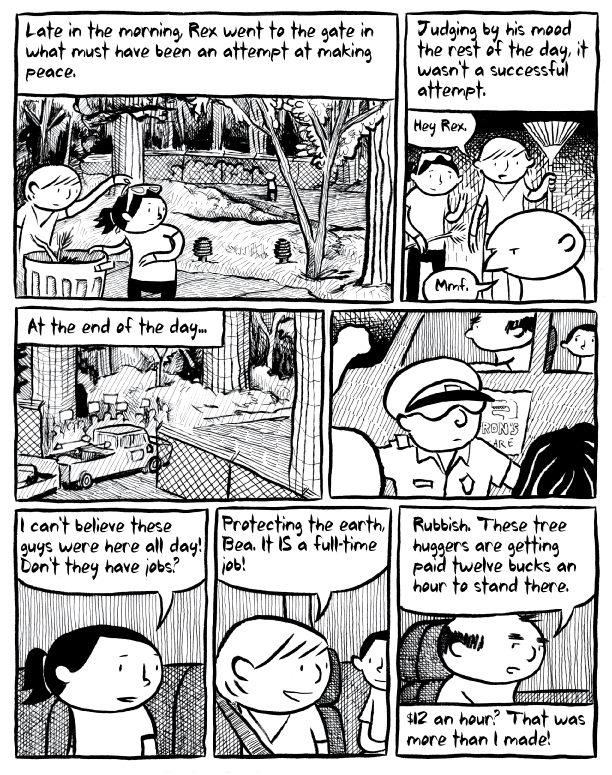
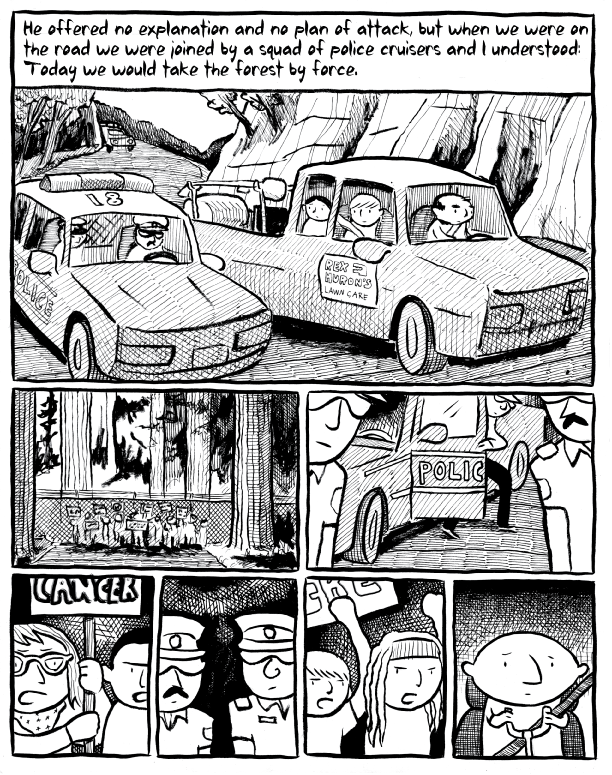
Picket-Line_1.png Picket-Line_2.png Picket-Line_3.png Picket-Line_4.png Picket-Line_5.png Picket-Line_6.png Picket-Line_7.png

Illustration by: Breena Bard


Written By: Ryan Nemeth

Last week, I turned on the local evening news to a story about a neighborhood activist group that was attempting to save two 100 year-old sequoia trees on a residential lot slated for a multi-unit housing development. The neighbors managed to raise $550,000 in earnest money through local contributions to begin negotiations for the purchase of the lot from the developer. I bring this story up, as it is a scenario that is becoming increasingly common in urban neighborhoods all over the globe as humans migrate to cities at an unprecedented rate. As our cities grow and become both more dense and sprawling, how much green space and old growth do we set aside from development? What land should remain off limits to preserve the character of our cities and how much undeveloped land is needed to maintain quality of life and ecological balance in our living environments? Clearly, the answer to these questions depends on where you live, who you are, and what you believe. One commonly held belief, supported by some environmentalists and urban planners, is the concept of urban density. It is the idea that cities operate more efficiently by promoting (via zoning) urban growth that is up rather than out (sprawl). The reported benefits of urban density initiatives are numerous, however it begs the question, what happens to all of our green space as we begin our urban infill initiatives?   Undeveloped lots in the city with old growth trees such as the case noted above become prime targets for developers as city populations swell and space becomes more scarce and coveted.  

In keeping with this subject, I recently read an article by Harvard Professor Emeritus E.O. Wilson where he proposed a radical concept. Wilson’s proposal is called the half-earth concept and he shares it with a number of colleagues and well-known ecologists. His idea is based on the belief that overconsumption and poverty could lead to the extinction of half of all species on Earth. The half-earth concept in action involves giving vastly more surface area of the earth to the rest of the plant and animal kingdom. In fact, Wilson suggests that fifty-percent of the globe should remain uninhabited by humans if we hope to reverse and stabilize current rates of global extinction. Wilson’ s argument is that we (humans) are taking up far too much of the planet and systematically eliminating biodiversity and many of the species we cohabitate with. He further develops the “half-earth” concept, by suggesting that our globe be filled with interlinked park systems that act as sanctuaries and recharge zones for plants and animals. In short, E.O. Wilson’s “half-earth” concept is rooted in the idea of population density. The underlying assertion being that increasing the density of human habitation could dramatically lessen our (human) ecological footprint.  

Notably, progressive initiatives to limit urban growth have been employed in the U.S. since the fifties. In 1973, Oregon was the first U.S. state to adopt statewide urban growth boundary (UGB) laws. An urban growth boundary, or UGB, is a regional boundary, which attempts to control urban sprawl by mandating that the area inside the boundary be used for higher density urban development and the area outside the boundary be used for lower density development. Currently, UGB initiatives are scarce at best as only 3 U.S. states and a limited amount of metros have adopted restrictive growth initiatives.  Yet, maybe there is something to this? Picking up on E.O. Wilson’s half-earth concept, I find the idea of density very powerful.  However, it seems beyond unrealistic to suggest that we could or should suddenly corral the world’s population into dense urban living environments. Maybe urban growth boundaries (UGB’s) already serve as a happy and functional medium to push society towards Wilson’s “half-earth” initiative?  As cities expand and as growth boundaries become one method for creating urban density, we must accept the fact that we will increasingly face land use trade offs and dilemmas. So the question to confront as we transform our cities is what should stay and what should go and why? If the energy savings generated by residents living in a new multi-unit high rise more than offsets the carbon offsetting capacity of two 100 year old Sequoias, should we cut the trees down to build the high rise? Clearly there is a lot to consider, my point is that we should be doing a lot of it as we charge forward into our dense future. 

Breena Bard is a Portland, Or. based illustrator, her graphic novel the Picket Line beautifully illustrates a common and shared urban dilemma. What stays and what goes as our city grows?  Here is an excerpt from her book, you can see more of the Picket Line and purchase a copy here: http://www.breenabard.com/#/picket-line/

 References:

  1. http://io9.com/e-o-wilsons-radical-plan-to-save-the-planet-1654447315
  2. http://www.kgw.com/story/news/local/2015/09/14/tree-sitters-attempt--stop-eastmoreland-sequoia-removal/72258360/
  3. http://www.sustainablecitiescollective.com/planningphotographycom/241696/urban-density-and-sustainability
  4. https://en.wikipedia.org/wiki/Urban_growth_boundary

Subscribe

Sign up with your email address to receive news and updates.

We respect your privacy.

Thank you!
Saturday 02.06.16
Posted by Ryan Nemeth
 

ROBERT ADAMS : Talks Photography & Environment

© Robert Adams, courtesy Fraenkel Gallery, San Francisco

© Robert Adams, courtesy Fraenkel Gallery, San Francisco

Written By: Ryan Nemeth

The American West has always been a frontier of sorts for most Americans. Not only is the West still ground zero for epic road trips and custom RV sightings; it serves as space for many of us to co-exist with nature. Living in the American West for most of my adult life, I am convinced that the idea of wide-open space and unadulterated land still represents a blank canvas to most humans. This association of limitless potential embodies the essence of the American West and for that matter still remains at the core of our American identity.  Furthermore, I believe that this cultural concept has made the American West potent for many generations of Americans and immigrants alike. For many, the landmass west of the Mississippi still represents fertile ground, a place of prospect, a land of dreams, and also a place to start anew. However, long gone are the days of the romantic Gene Autry and John Wayne Wild West shows. Yet, the esprit de corps of our famous American cowboys lives on as the American West continues to be tamed by a new westerner, the developer. 

Motivated by automobile access, propelled by cheap gas, and driven by the American dream, many Americans moved west after World-War II.  After all, the weather was nice, land was cheap, and this part of the States and its nostalgia represented the perfect place to start a new life. Thus, we began clearing land and making way for our new beginnings.  In the act of doing so, we reduced forests, paved prairies, and dammed rivers. We replaced pristine western land with shopping malls, strip malls, suburban neighborhoods, and other needed infrastructure to feed the growth of our newfound contemporary cities. What changed and what was challenged were the characteristic environmental spaces that help preserve the identity of our American West. It is evident through many generations of urban and suburban growth initiatives in the West that the majority has still not challenged an age-old formula for urban expansion and growth.  Furthermore, there is evidence to suggest that this formula is not sustainable in the long run. I assert that we have done very little to balance our resource consumption and environmental footprint with our desire to perpetuate new growth and inhabit space in the American West. To this day, in many parts of the West, we continue to cut and carve our way into pristine land and intervene in natural habitat.

One person that undeniable stood up and questioned these growth initiatives through the lens of his camera was Robert Adams. In fact, Robert Adams has pretty much dedicated his life to documenting and standing up to the environmental degradation and consumer creep inflicted on the American West. He has extensively documented the West’s open plains, forests, endless skies, and winding rivers. Yet, the raw beauty conveyed in his images is almost always juxtaposed with environmental overtones and metaphor of loss. Thus, Adam’s images are somewhat of a paradox as they depict the epic natural beauty of the American West simultaneous to the annihilation of that beauty by industrialization, consumerism, and pollution. As a reader, you should know that prior to Robert Adam’s and the New Topographic show of 1975 there really was no avenue for work of this nature in art photography. Adam’s legacy is that he helped usher in the concept of altered landscape as an art form. Thus, contemporary landscape photographers know a world before and after Robert Adam’s. We should be thankful that he helped secure a seat at the table for environmentally driven art photographers.

Given his stellar career accomplishments, it is easy to consider Adam’s legacy and his role in context to the places that inspired his work. In doing so, I cannot help but reflect on the spirit of the cowboy in the American West and wonder just how Robert Adam’s fits into this picture?  Cowboys are notorious for their land driven lifestyles, their freedom to roam, rugged independence, as well as their ability to break the rules and buck the system. I would argue that within the context of landscape photography, Robert Adams is all of these things and more! 

I had the chance to correspond via mail with Robert Adams about the environment and photography and here is what he had to say:

1. It is apparent in your work that you have a strong emotional bond and connection to nature. Can you attribute your affinity for the natural world to someone or something you have experienced in your life?

My father, bless him, first took me on hikes in the woods when I was three... he carried me on his shoulders.  They are among the first memories I have. We went on to share a love of the outdoors - hiking, camping, river running - for over sixty-years.

The other person who has guided my understanding of nature is my wife Kerstin. She is from Sweden where nature is practically a religion. She’s taught me particularly about animals and their sacredness. She’s just been calligraphing a beautiful aphorism by Porchia, “Even the smallest of creatures carries the sun in its eyes.”

2. Do you feel that the genre of landscape photography has changed over the course of your career? If so, could you elaborate on the changes that you perceive as occurring?

There have been relatively different emphases in landscape photography almost from the beginning.  At one extreme there has been a focus on aesthetic pleasure for it’s own sake, and at the other for the sake of understanding the world. A lot of work is somewhere in between, but there is always going to be a tension.

3. I know that you earned a Doctorate in English; yet, you chose the photographic medium as your preferred method for speaking out about the environment and communicating about landscape, why?

I came to feel that my gifts were primarily visual. Besides, it was more fun to be outside!  Certainly, I could never have written at the level of Wendell Berry, Edward Abbey, or John Hay. 

4. Much of the work you have produced demonstrates an intimate understanding of place. Do you feel that knowing or having a sense of place impacts your photography? If so, how?

I believe that my work is more truthful where I have watched the hours and seasons pass. It helps me to recognize what is characteristic.  And occasionally to hear... There is no way to say this without sounding foolish... the voice behind the other voices.

5. Throughout your career you have been actively involved in taking a stand against clear-cutting and logging activity. In fact, much of your career has been devoted to preserving the health of forests that surround your immediate living environment. What other current environmental challenges are important to you?

Locally, I worry, along with some of our neighbors about LNG (natural gas) terminals and coal and oil trains.  Nationally, my concerns are numerous - fracking, mountain top removal, etc.  But, behind all of these issues loom the stay-awake-at-night terrors; overpopulation, nuclear weapons, and climate change.

6. In keeping with the topic of activism, you have suggested through prior conversations that speaking out about the environment can be a solitary and isolating experience. I believe that this concept provides a powerful perspective on the process of change through activism. Would you elaborate on this idea?

Well, there’s some accuracy to the Turkish proverb that states, ”Tell the truth and be driven from nine villages.” Though as long as you do not make too much trouble, your opponents don’t come looking for you. Though, they don’t come asking you to be on their commissions either. But, the amount of activism that Kerstin and I have attempted has largely been limited by time and energy.  

7. Some photographers produce their work around a central theme or concept. Others shoot freely and then edit their work to identify common themes that can be consolidated and grouped together for a series of work. Can you elaborate on your process for creating a new body of work? How does the creative process work for you?

A lot of projects seem to start with more or less accidental discoveries, then you build on them!  Of course, even an afternoon of random exploration is shaped by your life’s values.  John Sarkowski had a wonderful and funny piece of advice when he thought something was stuck, he would say, “Just kick the tripod a little.”  

8. In thinking about the future of environmental activism through the lens of photography, what advice might you offer to those of us who are trying to change the world through imagery? Is there reason for hope? 

I wish I had some practical advice. When I look back over Kirsten’s and my life, it seems that we were saved by luck and discipline and the help of family and friends.  When it looks dark, I sometimes remember a line from Pablo Neruda’s speech: “I saw so many honorable misfortunes, lone victories, and splendid defeats.” Also, I should mention that once or twice I have repeated to a photographer a blessing that was formulated by the Spanish philosopher Miguel de Unamuno: “May God deny you peace, but give you glory.” He was thinking, of course, of Don Quixote. 

Subscribe

Sign up with your email address to receive news and updates.

We respect your privacy.

Thank you!
Saturday 01.02.16
Posted by Ryan Nemeth
 

DAVE IMUS - The State of U.S. Mapmaking

Image by: Ryan Nemeth - Northwest of Dave's House

Image by: Ryan Nemeth - Northwest of Dave's House

Written By: Ryan Nemeth

Dave Imus is no stranger to place as he and fellow cartographer Pat Dunlavey produced a masterpiece of a map titled, “The essential geography of the United States of America.”  Working in two-inch sections at a time, the map took Imus two years and roughly 6,000 hours to complete. The end result earned Dave Imus cartography’s highest honor, the Cartography and Geographic Information Society’s (CaGIS) Best In Show Award for 2010.  As the matter of fact, Imus has earned this distinction on four separate occasions over the course of 20 years. Thus, making him America’s most celebrated mapmaker.

What does it say for the state of mapmaking when a two-man team of cartographers is capable of producing maps that exceed efforts from the Central Intelligence Agency, the U.S. Census Bureau, and National Geographic?  Clearly, there is no question that Imus is a gifted cartographer and that his maps should be celebrated. However, his accomplishments could easily lead one to question the efficacy of both geographical systems and geographical knowledge at the institutional level in the United States.  Yet, another assessment of the situation is that these institutions simply lack the design sensibility, aesthetic training, and coinciding design skills necessary to produce detailed high quality maps. In fact, if you were to ask Dave Imus about this topic, he would tell you just that. In an interview, he stated his concern, saying, “We lack basic and necessary geographical information here in the United States.” In probing Imus about this assertion, he attributes much the problem to the quality of mapmaking here in the United States. The end result is that Americans lack good contemporary maps and geographical resources that are widespread and available.  I should mention that Imus has devoted his life to being a part of the solution, as his life’s work pushes American cartography in the direction of both science and art.

For Imus, it is evident that the occupation of cartography is as much design as it science. Thus, Imus is concerned as much about the layout of the information in his map as the geographical content and information contained within the map.  Both components are necessary and critical elements of a good map. In fact, much of Imus’s self-proclaimed competitive advantage may be found in this attribute. Imus explained that good mapmaking comes down to “clarity”.  Thus, it is implied that what might be lacking in most contemporary institutional and corporate maps is in fact this, “clarity”. Via modern technology, cartographers possess the capacity to generate the needed scientific and geographic knowledge within a map like never before.  However, what Imus suggests is that both the distillation and articulation of this information is what sets a good map and bad map apart; herein is the “art” of mapmaking.

It just so happens that Dave Imus lives an hour and half south of me outside of Eugene, Oregon. So who wouldn’t want to hop in the car and drive to a farmhouse in the middle of grass seed country to talk cartography, geography, and renaissance?  Yep, this is exactly what I did! Here is the interview that transpired with our celebrated American mapmaker:

Ryan:  Dave, I appreciate you taking the time to meet with me to elaborate on the art of map-making. Let’s jump right into the subjects of geography and cartography. I know that you have commented extensively on discrepancies you observe between American’s and European’s knowledge of geography. What do you think the difference is in the level of geographic knowledge between the two continents?

Dave:  I have a lot of thoughts on this subject! Europeans have had access to maps of general geography for over 400 years. Artistically, European general geography maps are on par with American botanical and medical illustrations. Similar to botanical and medical illustration, mapmaking is a science-based art. However, in the United States mapmaking has not benefited from the artistic treatment realized elsewhere, such as Europe, or more specifically in Switzerland, where cartography has exceled.  

Ryan:  Do you think this geographical deficiency has something to do with technology and a move towards more automated map-making processes? Is it a process problem or something beyond?

Dave:  It’s a process issue. I think most of the difference in quality and expression between European and American maps stems from our dissimilar cartographic origins. European mapmaking started 400 years ago and was valued for its geographic expression. American mapmaking started more recently as an expeditious representation of data. For example, Rand McNally’s first maps were railroad maps that they made to promote rail travel. These maps benefited Rand’s primary business, the printing of railroad tickets.

Ryan:  It is evident that maps could easily aid business interests, especially for businesses involved in infrastructure and transportation industries. Our current satellite imagery might be no different? It seems that the widespread availability of satellite imagery has also spawned many new business ventures with commercial mapmaking interests.

Dave:  Are you old enough to remember free maps at gas stations?

Ryan:  Barely! I think we paid a quarter or so for these maps when I was really young.  However, these paper road maps were always something to wrestle with during a road trip. I remember my dad opening those maps up and it felt like an air bag had been deployed in the car.

Ryan and Dave:  Hah Hah.

Dave:  These free maps serve as really good examples of commercial maps that are very pedestrian in nature.  However, they were never intended to be maps of geographic expression. This being said, we do need aids to navigation, therefore there is a place for navigational maps such as Google maps. However, if you want to understand the land rather than just move through it in space, you need maps with much more expression and concise geographic information! In fact, I think widespread geographical literacy is impossible without quality resources that portray basic geography.

Ryan:  I feel like more and more my generation seems to be traveling in space without a keen awareness or interest in place or our surroundings. Most of the time, the question is how do I get from point A to B as fast as possible? We are definitely a generation that relies on computer-mapped routes as a primary means for our navigation. What might we be missing out on?

Dave:  I think what you describe points to a general lack of appreciation for basic geography. This simply is a lack of appreciation for basic characteristics of the land. It is possible that we need to approach geography from a wider vantage point, such that geography is enjoyed rather than being merely employed as a tool to serve our needs.  Seen through a geographic lens, the land is a thing of great beauty. In fact, observing attributes of land and admiring basic geography should be similar to noting the beauty of flowers. The more closely we look at flowers, the more beauty we see. The same can be said of the world when viewed through a geographic lens.

Ryan:  Great point! I am going to switch topics here. What are we doing to make our maps more expressive? Has mapmaking evolved and how is the commercial side of the industry progressing?

Dave:  Take for example a big mapmaker like National Geographic; they are currently producing revisions of essentially the same map they have made for a long time.  The shaded relief components of their current maps are their old hand drawn shaded reliefs. I should mention that these are not science based shaded relief sections. In fact, they are highly impressionistic in nature!

Ryan:  And the National Geographic map has looked like this for how long?

Dave:  I believe that National Geographic’s map of the United States is based on a design that they have employed since the 1940s. This was an era in American mapmaking when we were not concerned with producing high quality products. Thus, I see National Geographic’s maps as the geographic information equivalent of a 1971 Oldsmobile. Unfortunately, these maps are still sold commercially and I believe they are the reason Americans continue to suffer geographically.

Ryan:  Wow! This begs the question, what can be done about this? Do we possess the skills to change the quality of our contemporary maps here in America? Or better yet, could there be a renaissance in mapmaking here in America?

Dave:  Oh there will be, this is my goal and has been for a while! I feel that given the arc of my career that I am in a position to help influence a new direction in American mapmaking.  I hope that my maps are already doing this!

Ryan:  What are some of the barriers that exist that prevent us from taking a new direction in mapmaking?

Dave:  In my case, I feel that my maps are not understood. To my map-making colleagues, my maps look like just another map. Not too long ago, the head of cartography at the Smithsonian reviewed the Essential Geography of the USA, the map I produced that won the CaGIS award.  His review was obtuse; it was evident that he totally misunderstood that he was reviewing the first general map ever made of the United States of America.  This map was made to an artistic standard that American cartography does not embrace.

There are a lot of great mapmakers in America, but they are not great artists, they are great scientists. For example, medical illustrators are trained in medicine and then they are trained in the art of medical illustration. Cartographers are trained in geography and the science of cartography, but they are not trained in the art of geographic illustration, which is what cartography is at its heart.  American cartographers go out in to the world with scientific skills, making them scientists, not artists. Because they are not artists, many cartographers do not understand the value of spending 6,000 hours on a map. To many of my peers, but certainly not all of them, they believe the amount of time I spend making a map is mystifying. However, to me, maps are worth the time and effort.  I see huge potential to have a geographically engaged society through these efforts!

Ryan:  So in parting, how do we get there, how should cartography proceed and what should change?

Dave:  For a long time, I believed geographic literacy would benefit if cartographers placed greater value on design. Now, I believe we need an entirely new movement in cartography that is artistic at its core. The ultimate solution would be to train cartographers in geography and the art of cartography, without much attention paid to technology.  A solution could be found in academic training and generated by implementing design oriented cartographic curricula.  Currently, there are many barriers as our cartography curricula are still driven by industry standards that do not embrace artistry. Also, I believe that there needs to be a second mapmaking society in the U.S., one that focuses on cultivating art and design in the profession.  This is what the industry should pursue if we hope to produce high-quality geographic resources for the American public.  

Ryan:  It sounds like we could really benefit from change in the industry, I am all for it!  Additionally, thanks for taking the time to share your thoughts. This has been an enlightening discussion!

You can find Dave Imus and his amazing maps here: imusgeographics.com

Subscribe

Sign up with your email address to receive news and updates.

We respect your privacy.

Thank you!
Saturday 01.02.16
Posted by Ryan Nemeth
Comments: 1
 

SHIFT: Rethinking Cars in the City

Image by: Akos Major

Image by: Akos Major

Written By : Dylan Morgan

EDITED BY : Ryan Nemeth

Each morning most Americans walk out to their cars and begin a circuitous commute. Our routes typically include multiple collector streets, highway interchanges, and some degree of frustrating traffic congestion. As a designer, I spend most of my time in traffic wondering how we will ever recover from the past century of urban planning and infrastructure design. If you look back in American history, you find that our modern system of highways and suburban neighborhoods were largely incentivized and designed around a great American product, the internal combustion engine automobile. Now that our cities are filled with car-centric elements such as highways, parking lots and low-density sprawl, how can they be adapted to create a future environment that is less oil dependent, less polluting, and more walkable?

Before we can address our current transportation problems we must understand the DNA of our cities. An abbreviated history of America’s transportation infrastructure goes something like this: In the 1940s, Pacific City Lines (PCL), a subsidiary of General Motors, Standard Oil, and Firestone Tire and Rubber began buying streetcar lines in many U.S. cities and offering to replace them with bus systems. By 1950, PCL had allowed many of the new bus systems to fail and urban residents were left without public transit in most U.S. cities. This process, known as “the Los Angelizing of America,” was the result of a strategy from then GM chairman, Alfred Sloan. Sloan’s strategy and coinciding efforts shifted federal funding away from public transit infrastructure and instead promoted highway construction projects.  In the form of the Federal Highway Acts of 1944, 1956, and 1968, the government adopted Sloan’s proposal and began building an elaborate system of highways leading both to and throughout our cities. These new paths for mobility were designed exclusively for the car and they still support a coinciding suburban lifestyle where home life is connected to the rest of our daily needs largely via a singular mode of transportation. It is important to note that this car-centric vision became the standard for urban growth throughout the mid-20th century. 

The truth about the efficacy of Sloan’s plan is that America was built within a system of roads and highways that have become inadequate for our current urban needs. With America and the rest of the planet continuing to transition to urban lifestyles, we have largely exceeded our capacity to efficiently add more drivers to the road.  It seems that with each increase in the number of vehicle lanes and alternative routes, the traffic levels simply continue to rise and we find ourselves once again stuck in gridlock. The time has come to envision American cities that are sustainable by design and therefore run efficiently. However, without good precedents for repairing our current urban fabric, we find ourselves at a loss for proven solutions.

As our awareness of the true social and environmental cost of driving has increased in recent years, urban designers, myself included, have begun to villainize the car.  However, given our current urban fabric, we will likely have to keep our newfound enemy close. In fact, most of our recent innovations in urban mobility have come through technological and business model innovations as applied to the automobile. Services like Uber and Car2go have introduced flexible car sharing models that pair easily with other transit modes and take advantage of our existing infrastructure. Take for example, Google’s automated car and similar crash-prevention systems already installed in many vehicles. These technologies are examples of what I see as a viable solution for our new urban transportation needs. As Americans, we have long tried to reestablish streetcar systems, pedestrian plazas, and bike lanes.  However, our low-density urban environments inherently prevent these systems from experiencing the popularity and efficacy found in European cities, for example. Thus, it is implied by both our history and culture that a major shift in transportation will likely still involve the car as means for transportation in urban America.

Perhaps the latest car innovations can provide inspiration for a new American streetscape. One where cars become less of a dominant force and instead serve as the link between other modes of transportation. It is compelling to imagine a city where the presence and role of the automobile is reduced. Hypothetically, this would allow our streets to become; efficient instead of wasteful, free-flowing instead of congested, quiet instead of loud, clean instead of dirty, safe instead of dangerous, and shared instead of owned. As far out as this concept sounds, the technology to achieve this new urban reality already exists and is primed and ready for adoption.

Moving forward, I believe that the efficient movement and mobility of people has to be central to our new vision and strategy for transportation in urban space. After all, our obsession and love for our cars got us into this trouble in the first place. We have allowed the dominance of a single transit mode and the concept of individual car ownership for all to restrict our ability to adapt our cities to contemporary transit needs. If a single transportation method has proved to be inflexible; then certainly a more diverse approach to transit will likely better serve us in this time of urban and environmental flux. With this lesson in mind, let’s turn our attention to the biggest problem of the 21st century, keeping people connected to resources such as jobs, education, food, and shelter in our rapidly growing and fast-moving cities.

As mentioned, I believe that several solutions for improving both the mobility and the livability of urban environments can be supported by a new version of the automobile. However, I am also an advocate for adopting new fuel sources for our vehicles as well as changing the way that we utilize our cars. Personally, I see a bright future in fleets of electric automated cars that can be shared or rented in order to open up access to other modes of transportation. Here is a short list of several benefits that could be gained by utilizing fleets of automated electric cars in our cities:

1. Automated cars will solve one of the biggest concerns for urban residents: parking. Without the need to retrieve our privately owned cars from a parking lot, cars will be free to find parking in many of the underutilized spaces within the city. Automobiles will park with unimaginable efficiency. The next car in line will simply be available as needed and each interchangeable with the next. Those with low batteries will return to a charging station in an out-of-the-way location. This new spatial efficiency will accommodate greater density, thus, reducing the need for motor vehicles and increasing the quality of life in the city.

2. Automated cars will provide mobility to the elderly, the young and the disabled; while also safely transporting the drunk and the injured.

3. Networked cars will prevent congestion by seamlessly merging and redistributing traffic for maximum efficiency. Cars will be customized to respond differently to each neighborhood they travel through. With an awareness of travel delays they will reroute themselves and take better advantage of surface streets. Traveling slow at times and fast at others, networked cars will increase efficiency and safety for all transit modes.

4. With the goal of zero fatalities becoming a real possibility, automated cars will safely share the road with pedestrians and bicyclists increasing the space for these alternate modes of travel as well as their popularity.

5. Electric cars will eliminate air pollution and reduce noise pollution on the street edge, further benefitting pedestrians and cyclists.

6. Automated electric car fleets will be used as large batteries to retain solar power and redistribute energy in times of low sun.

7. Shared automated cars will be used as “last mile” vehicles to connect people with other transit options such as pedestrian streets, streetcars and bike share systems.

8. Automated vehicles will improve productivity by allowing people to work during their commute. Traveling in an automated car will be an extension of your office or your home. Perhaps even joining you indoors after you arrive at your destination. This will lead to less time-sensitive travel.

9. Shared automated vehicles will be a critical part of the public transportation system providing suburban mobility to those unable to afford centralized housing and increasing access to resources such as jobs and groceries.

10. Automated highways will provide an alternative to flying, greatly reducing carbon emissions and conserving limited oil resources.

References:

Dunham-Jones, Ellen. Retrofitting Suburbia. John Wiley and sons. 2011.

Millard, Bill. Urbicide: selected case studies. In Content, by Rem Koolhaas. Koln: Taschen. 2004. p. 40-43.

Nelson, Arthur C. Reshaping Metropolitan America: Development Trends and Opportunities to 2030. Washington, DC: Island Press, 1995.

Safdie, Moshe and Wendy Kohn. The City After the Automobile: An Architect’s Vision. New York: Basic Books, 1997. 

Subscribe

Sign up with your email address to receive news and updates.

We respect your privacy.

Thank you!
Saturday 01.02.16
Posted by Ryan Nemeth
 
Newer / Older